

In today’s digital era, efficient workflows are crucial for business success. While traditional digital workflows are still widespread, AI-powered workflows and AI agents are gaining increasing importance. This post highlights the differences between these approaches, explains how they work, and shows practical examples. Additionally, specific subtypes of AI workflows and AI agents are presented to provide a comprehensive understanding.
Traditional Workflows
Definition
Traditional workflows are rule-based, automated processes that execute predefined tasks and processes in fixed sequences. They’re based on clear, structured rules and designed to efficiently and error-free handle recurring tasks. Such workflows are widespread in many areas such as accounting, human resources, or project management.
Example
A typical example of a traditional workflow is the approval process for travel expense reports. Once an employee submits a report, it passes through various stages: the supervisor reviews and approves it, then accounting is notified to process payment. Each stage follows a fixed set of rules without deviations or dynamic adjustments.
AI Workflows
Definition
AI Workflows are more complex systems that combine Large Language Models (LLMs) and various tools through predefined paths, tools, and code functions. Unlike traditional workflows, AI Workflows can make more intelligent and flexible decisions by analyzing data and recognizing patterns. They enable higher automation and efficiency by not just executing tasks but also optimizing and adapting them.
Example
An example of an AI Workflow is automatic customer service in an e-commerce company. Here, an LLM analyzes customer inquiries, classifies them, and routes them to appropriate departments. At the same time, certain responses can be automatically generated and sent, shortening response times and increasing customer satisfaction.
Subtypes of AI Workflows
Augmented LLM
Definition: Augmented LLMs are Large Language Models enhanced with additional components such as retrieval systems, tools, and memory. These extensions enable LLMs to access more extensive data and handle more complex tasks.
Example: An augmented LLM in a customer service tool can not only answer inquiries but also access a database of product information and make personalized recommendations.
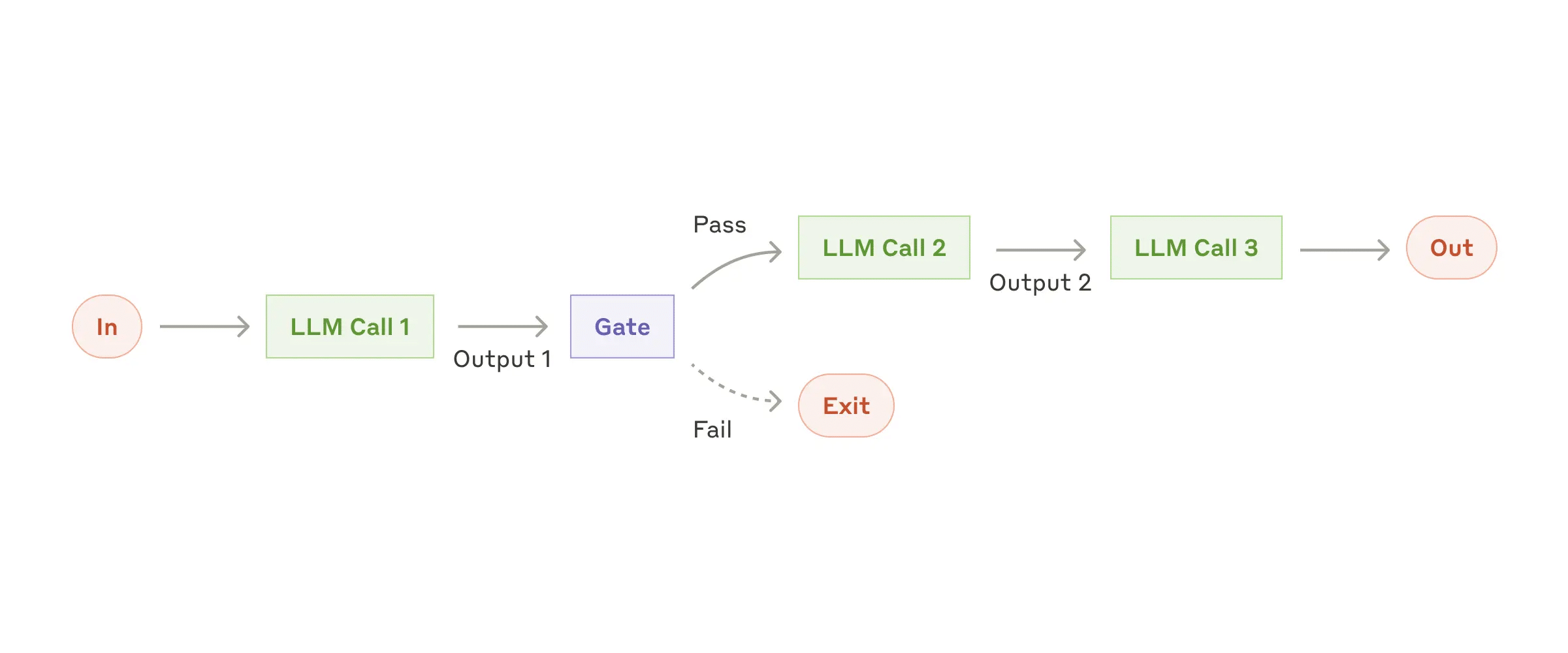
Prompt Chaining
Definition: Prompt Chaining divides a task into a series of steps where each LLM call processes the output of the previous one. This enables step-by-step handling of complex tasks.
Example: When creating a detailed report, an AI Workflow could first generate an outline, then elaborate each section individually, and finally combine everything into a coherent document.
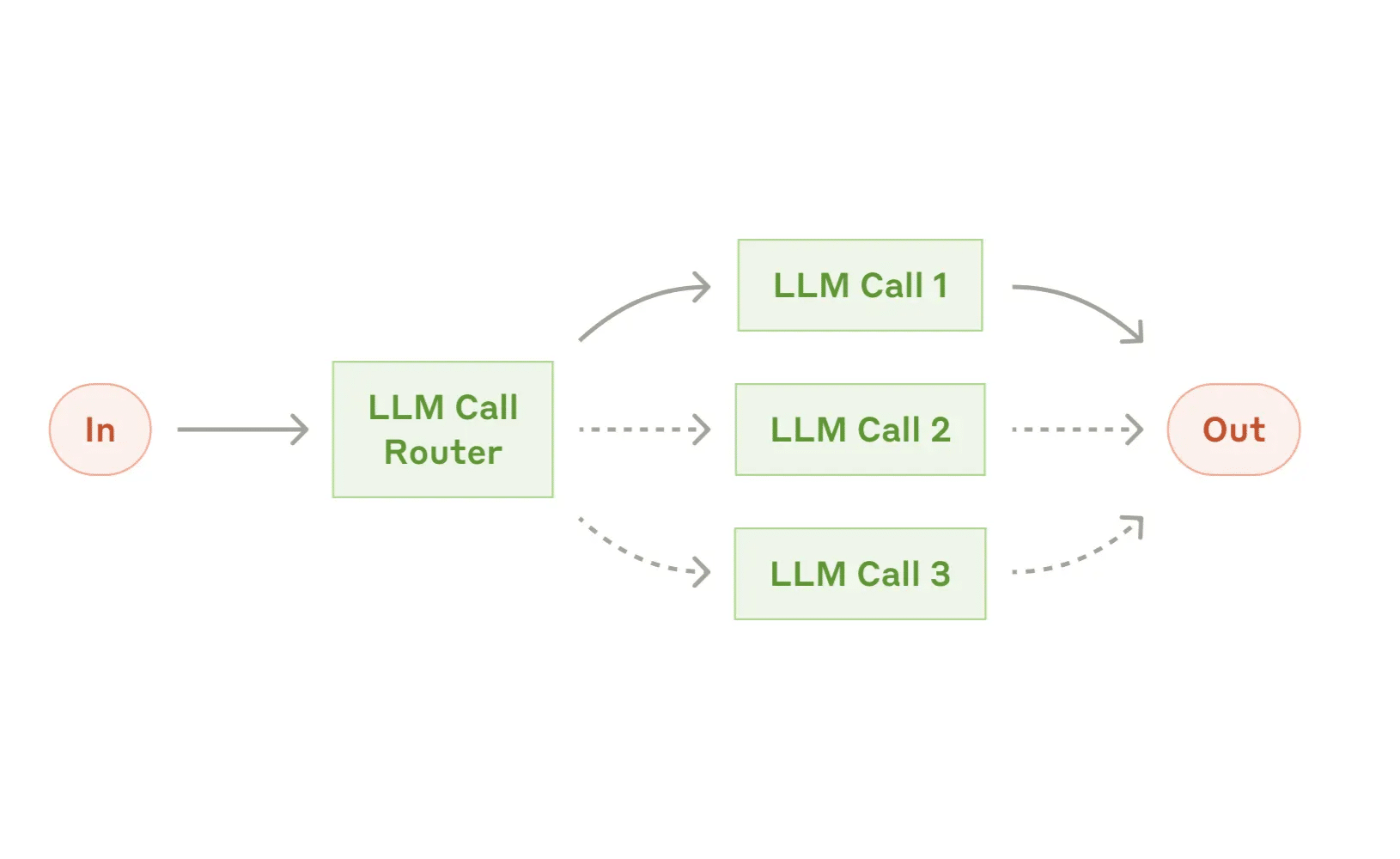
Routing
Definition: Routing classifies inputs and routes them to specialized follow-up actions. This ensures requests are efficiently forwarded to the right resources or departments.
Example: In a support center, incoming requests could be automatically classified by topic and urgency and then routed to the appropriate support representative.
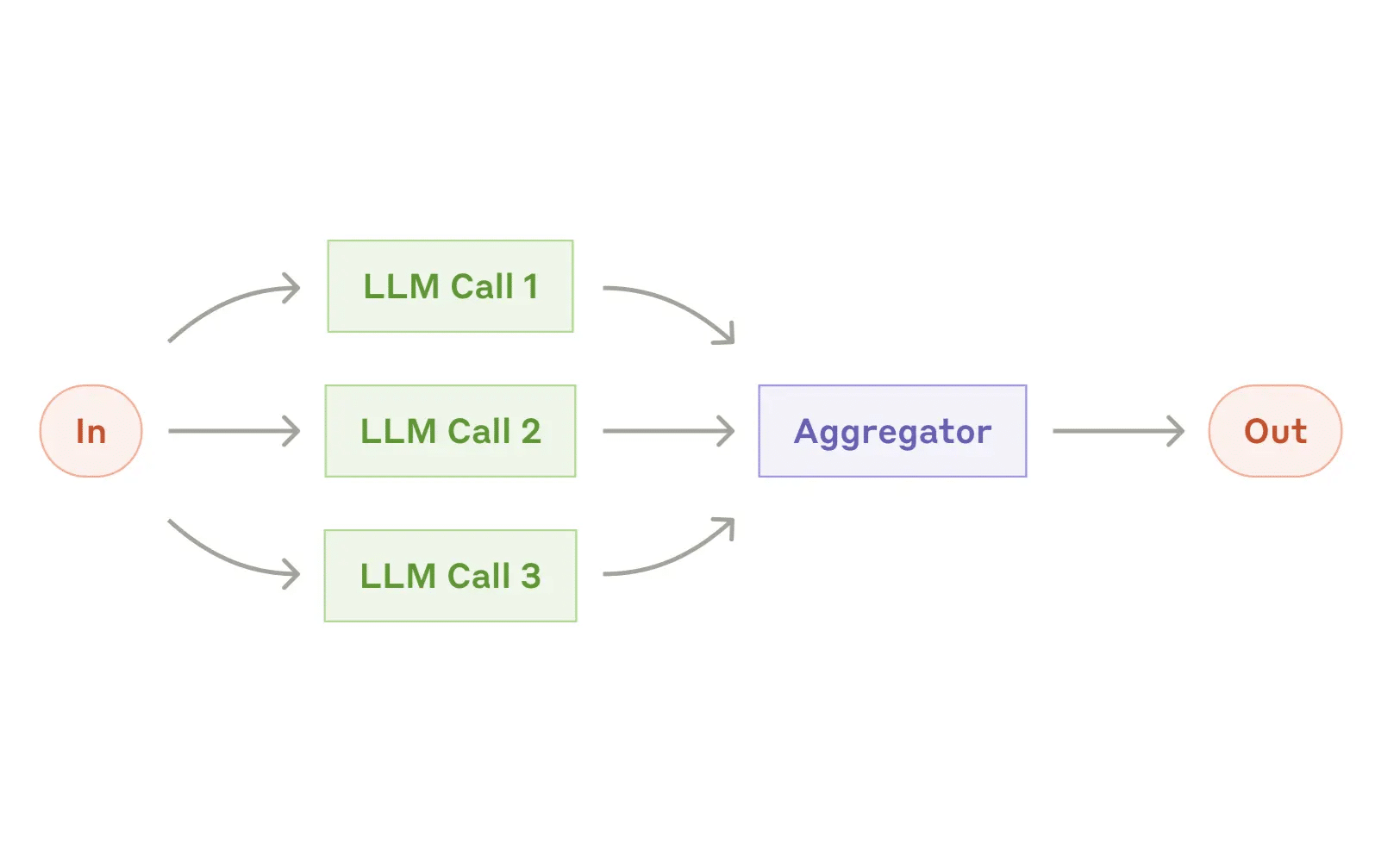
Parallelization
Definition: Parallelization allows multiple LLMs to work simultaneously on a task with outputs programmatically aggregated. This accelerates processing and increases efficiency.
Example: In data analysis, an AI Workflow can run multiple analysis models simultaneously and combine results for more comprehensive insights.
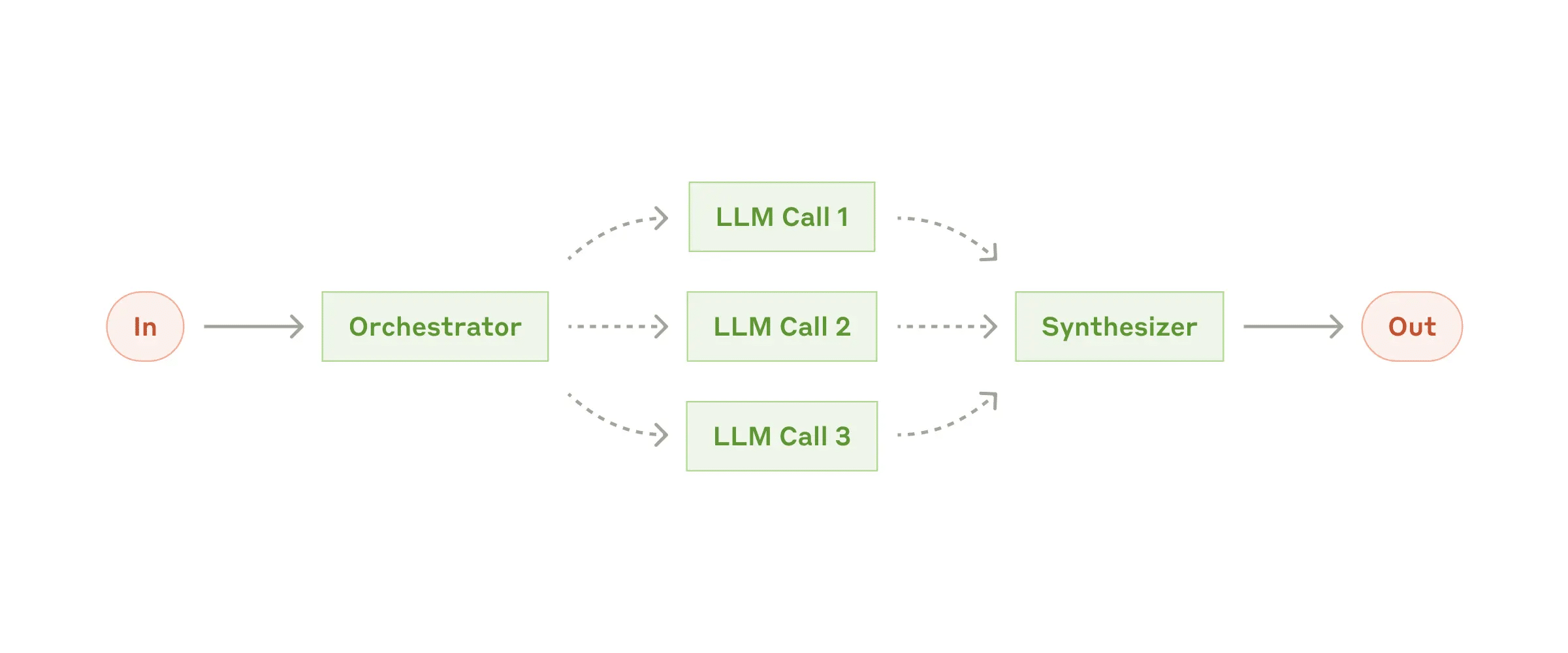
Orchestrator-Workers
Definition: In the Orchestrator-Workers workflow, a central LLM dynamically decomposes tasks, delegates them to worker LLMs, and synthesizes their results. This enables flexible and scalable task distribution.
Example: In a marketing company, a central LLM could delegate various campaign elements like texts, images, and videos to specialized worker LLMs, which then create them and bring them together for the final campaign.
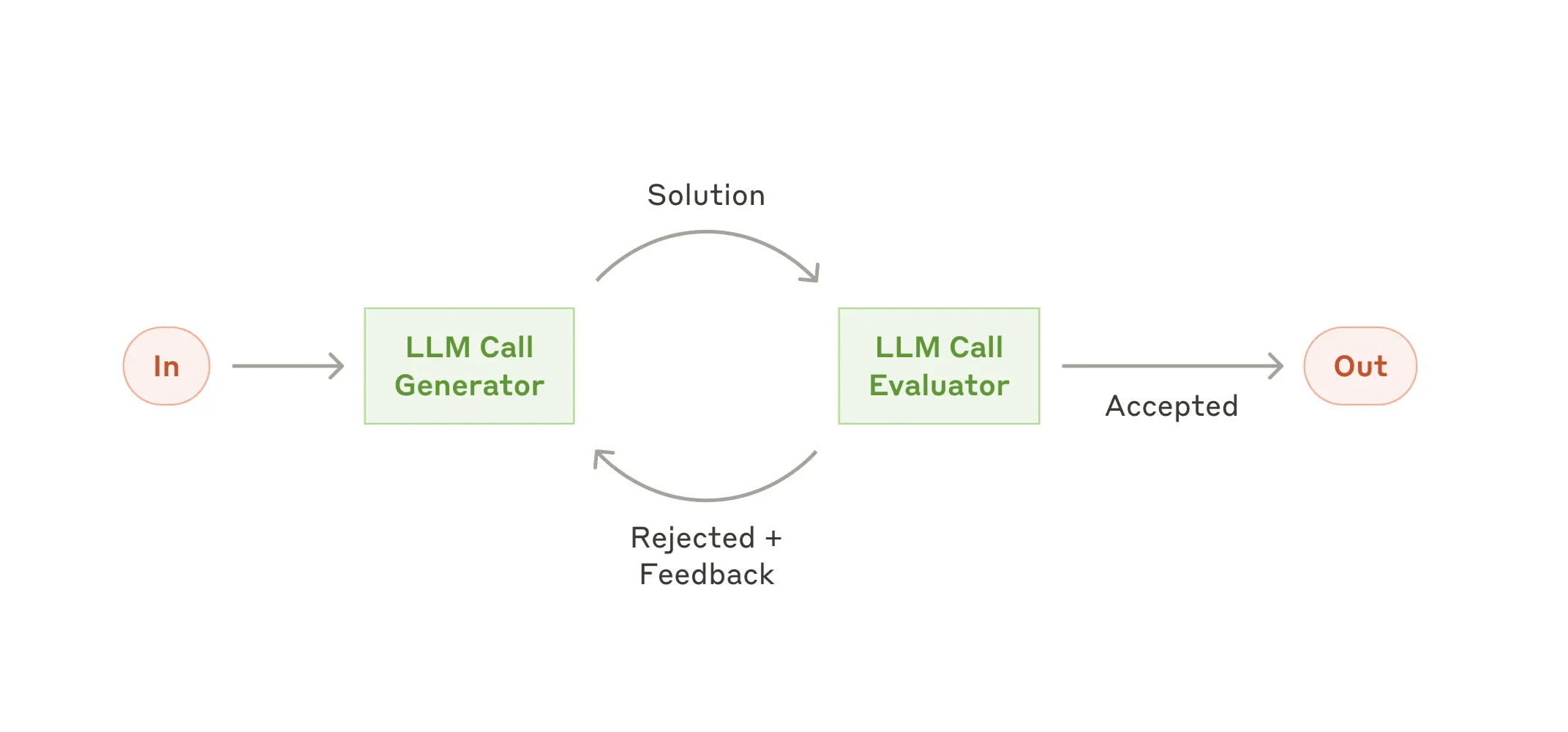
Evaluator-Optimizer
Definition: In this workflow, one LLM generates a response while another LLM evaluates it and provides feedback in a loop. This leads to continuous improvement and optimization of results.
Example: When creating content for a website, one LLM can write the first draft while a second LLM reviews it, makes improvement suggestions, and adjusts the text accordingly.
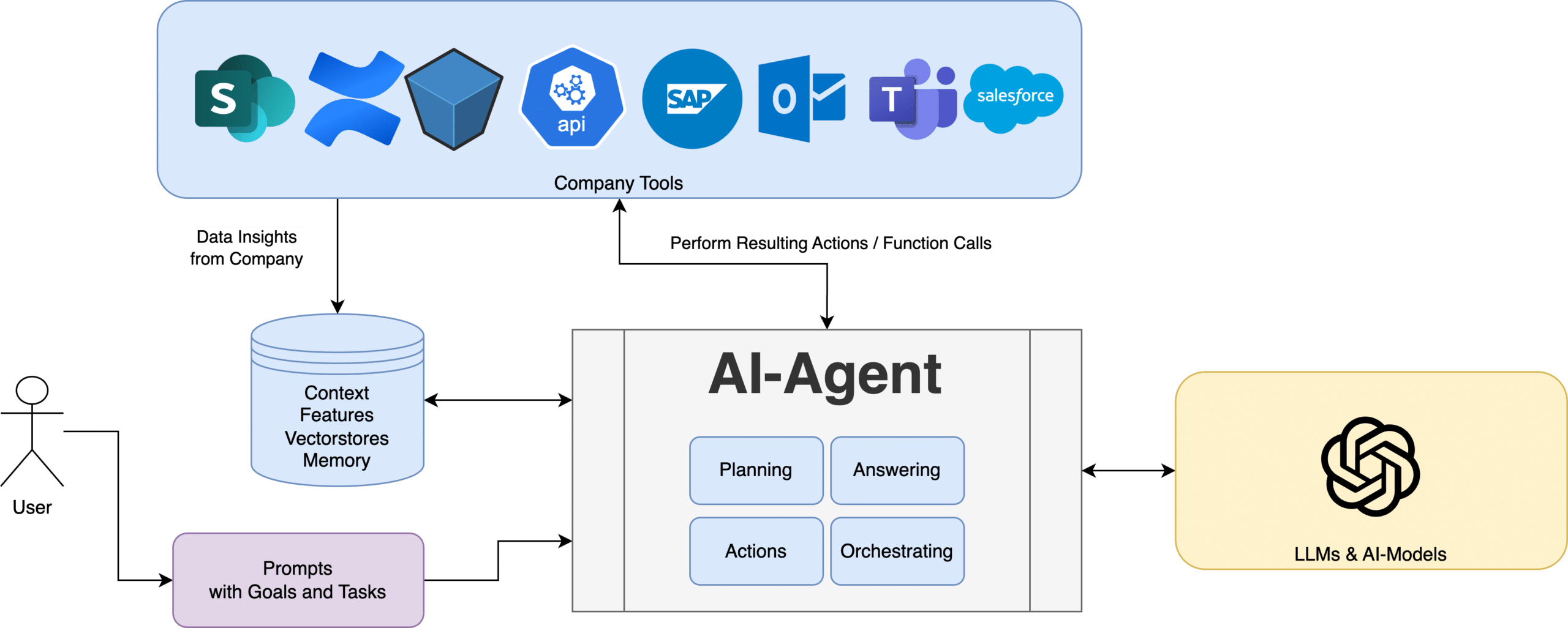
AI Agents
AI Agents are highly developed systems based on Artificial Intelligence capable of independently and autonomously handling complex tasks. They use Large Language Models (LLMs) as a central intelligence component and are connected to a variety of tools, APIs, and data sources. These agents can not only execute predefined processes but also dynamically react to their environment, make decisions, and adapt to changing conditions.
Unlike traditional workflows and even AI workflows, AI Agents don’t work merely along fixed paths. Instead, they have the ability for self-direction, meaning they can define goals, set priorities, and continuously optimize their approach based on real-time data and feedback. Through this autonomy and flexibility, AI Agents can take on complex, multi-step tasks that require an adaptive and intelligent approach.
Key characteristics of AI Agents include:
- Autonomy: Ability for independent decision-making without constant human intervention.
- Interactivity: Ability to communicate and interact with various systems and users.
- Adaptivity: Ability to learn from experience and adapt to new situations.
- Integration: Seamless connection with different tools, APIs, and data sources to extend functionality.
- Goal Orientation: Focus on achieving specific goals through optimal resource utilization and problem-solving.
Example
An illustrative example of an AI Agent is an intelligent sales assistant in a medium-sized company. This agent can independently analyze customer inquiries, retrieve relevant information from the CRM database, and create personalized offers. Additionally, it can create forecasts about future sales opportunities by evaluating market trends and historical sales data.
Imagine a potential customer sends an inquiry through the company’s website. The AI Agent recognizes the inquiry, analyzes customer history, and automatically creates a customized offer. Simultaneously, it plans follow-up activities, reminds the sales team of important appointments, and dynamically adjusts strategies based on customer feedback. Through these comprehensive capabilities, the AI Agent not only increases sales team efficiency but also improves customer satisfaction through fast and precise responses.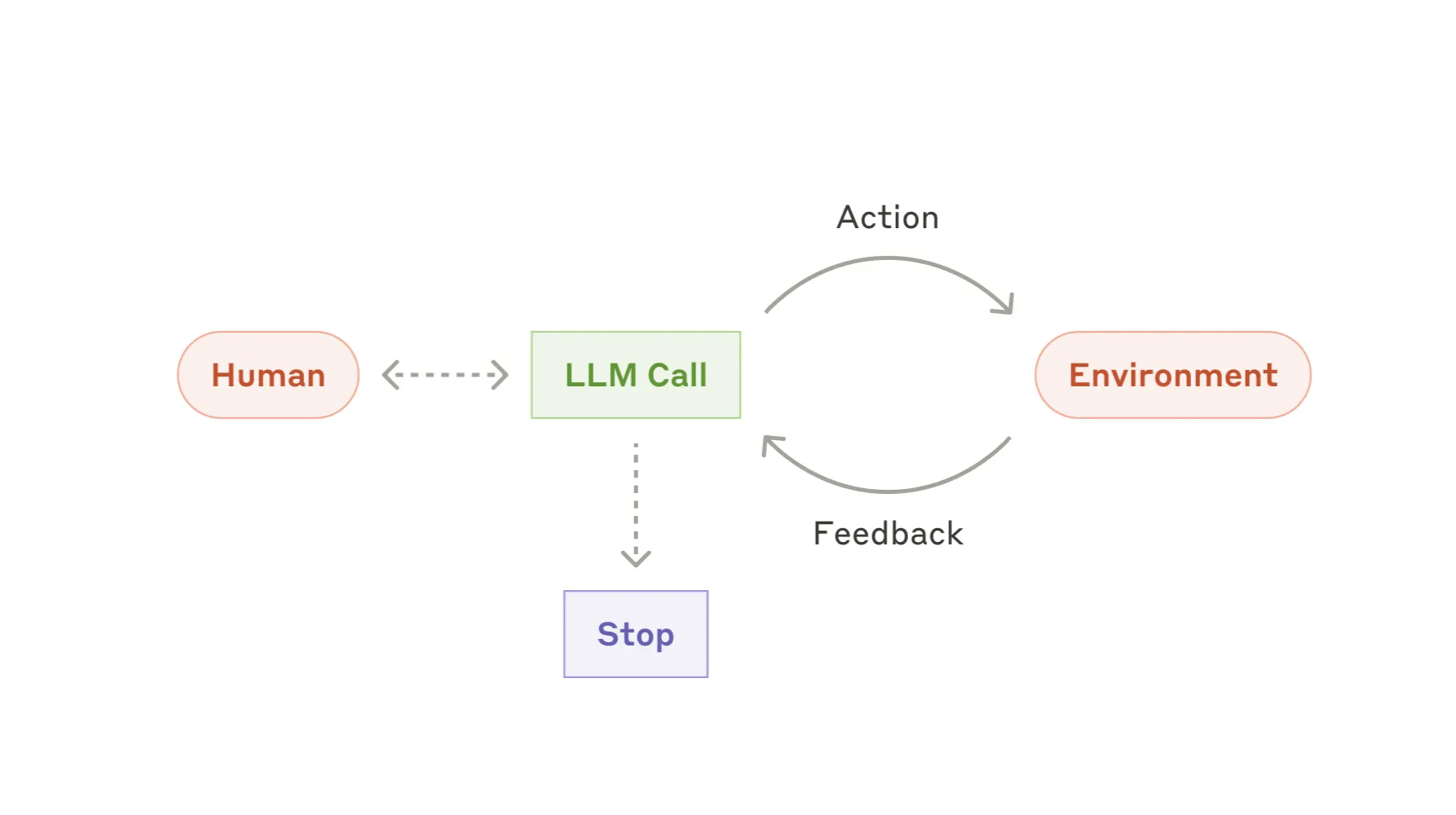
Subtypes of AI Agents
Singleton Agent
Definition: A Singleton Agent plans how to fulfill a request and executes predefined actions. It operates without external delegation.
Example: A scheduling agent that automatically enters meetings in a calendar based on predefined rules, without additional tools or feedback.
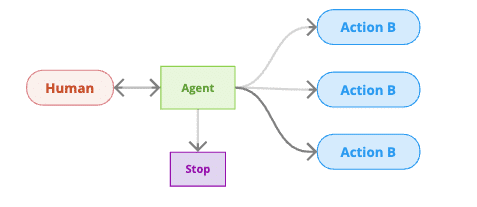
Multi-Agent with Supervisor
Definition: In this subtype, a Supervisor Agent delegates incoming requests to the most suitable expert agents. This optimizes resource utilization and ensures efficient task completion.
Example: In a large corporate structure, a supervisor agent could analyze requests and route them to specialized agents for accounting, IT, or marketing as needed.
Hierarchical Agents
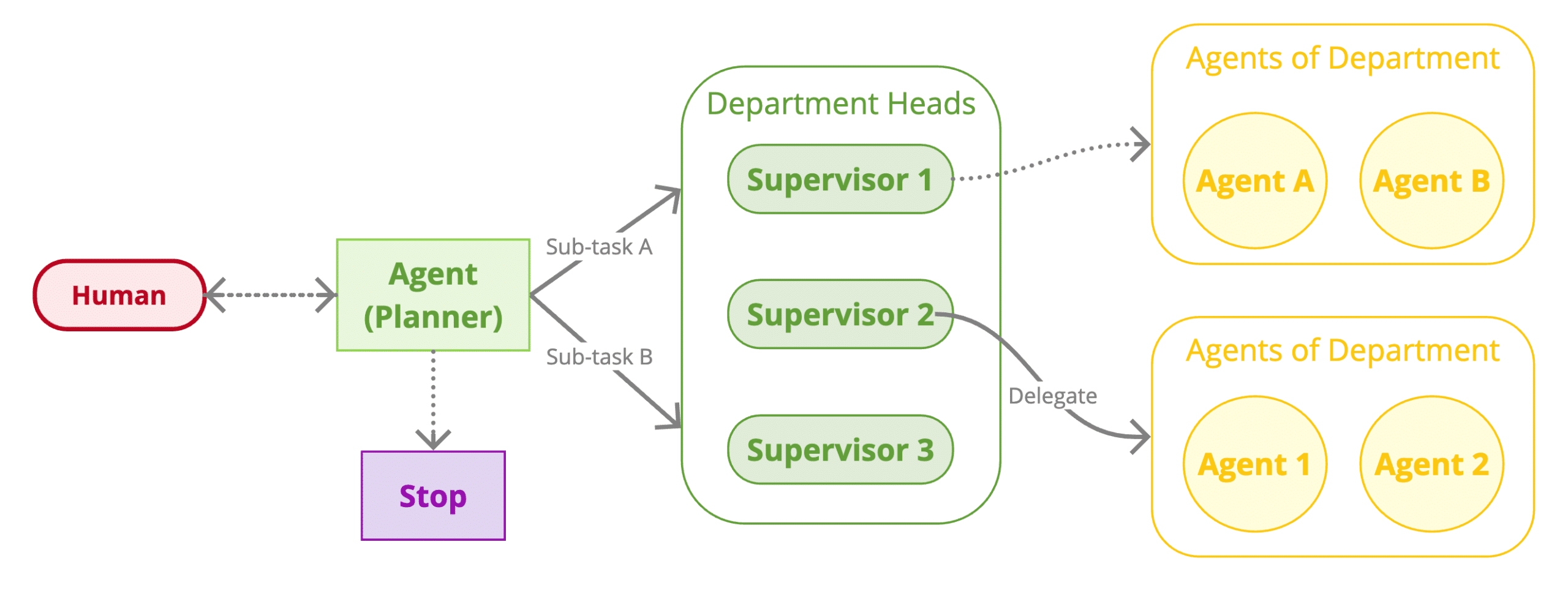
Definition: Hierarchical Agents consist of a planner agent that creates subtasks from a user request and passes them to respective departments. Task division ensures a clear separation of responsibilities.
Example: A Hierarchical Agent could initiate a complex project by first creating a market analysis, then delegating product development to the appropriate department, and finally handing off to sales.
Peer-to-Peer Agents
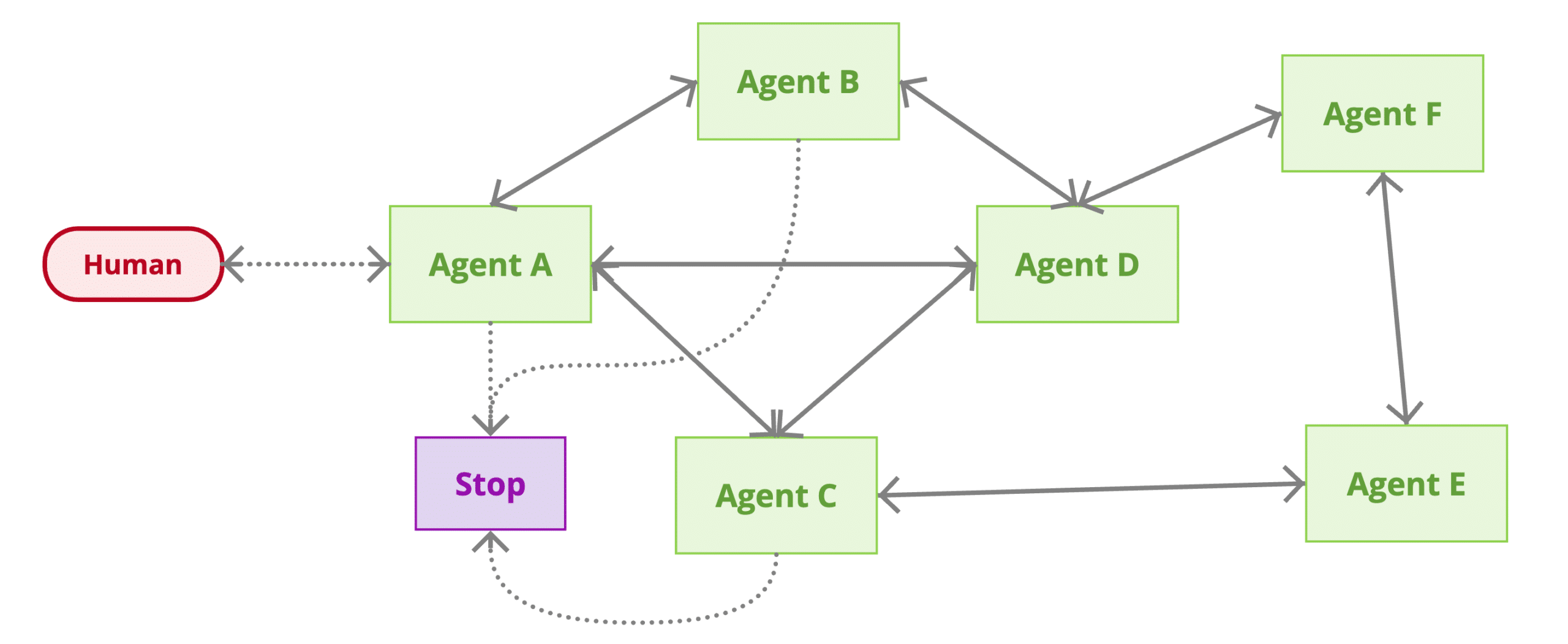
Definition: Peer-to-Peer Agents work together as equals, with each agent either executing the task itself or requesting help from a peer agent. All agents share the same memory and session, enabling a collaborative working method.
Example: In a collaborative research project, Peer-to-Peer Agents could analyze data, exchange ideas, and jointly develop solutions by continuously sharing information with each other.
2025 – The Year of AI Agents
The evolution from traditional digital workflows to AI Workflows and finally to AI Agents marks significant progress in automation and efficiency improvement of business processes. While traditional workflows are based on fixed rules and clear structures, AI Workflows offer more flexibility and adaptability through the use of LLMs and specialized tools. AI Agents, on the other hand, enable even higher dynamics and independence by making decisions autonomously and continuously adapting to changed conditions.
For managers of medium-sized companies, it’s essential to understand these developments and deploy them strategically to secure competitive advantages. By implementing suitable AI-powered systems, processes can not only be made more efficient but also innovatively developed further. A well-founded AI strategy that considers both technical and legal aspects forms the basis for sustainable success in an increasingly digital business world.
At innFactory AI, we expect to design a variety of AI agents with our customers and partners in 2025.
Source of visualizations: LinkedIn post by E. Ordax, 2024, Amazon Web Services